
TL;DR

Turn quiet afternoons into listening time
- Thousands of audiobooks, podcasts and originals
- Listen on your phone, tablet or Echo — also offline
- Cancel anytime
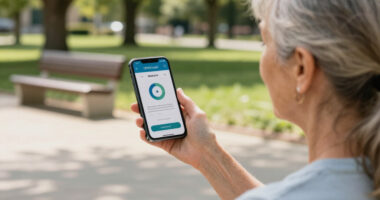
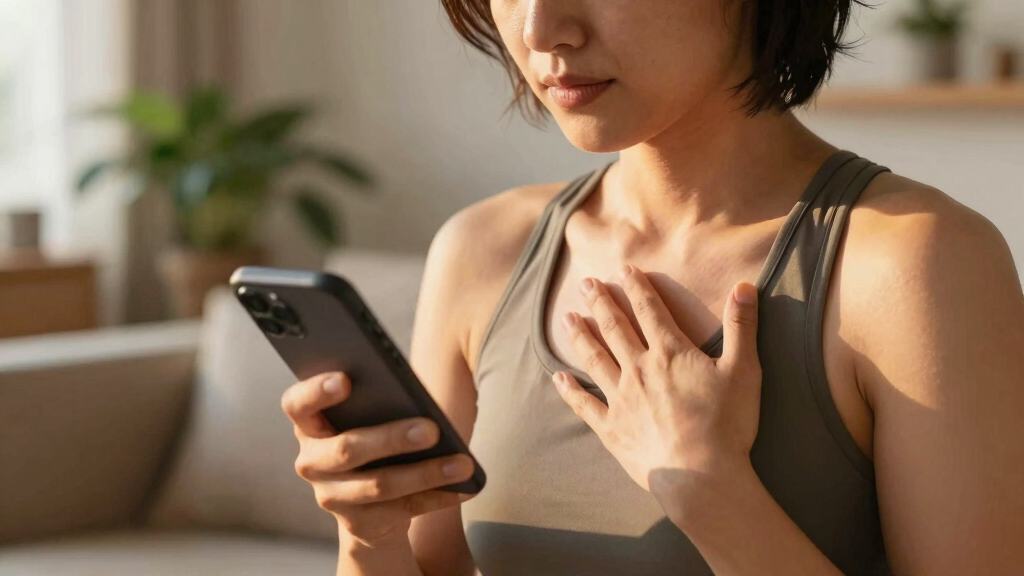
A developer has created an app that uses a phone’s microphone to detect breathing patterns and provide biofeedback in real time. The system processes audio locally to estimate breathing phases, supporting self-awareness practices without wearables or speech recognition. Validation is ongoing to assess accuracy in uncontrolled environments.
A developer has released a project demonstrating real-time breath detection and biofeedback from a phone microphone, aiming to support self-awareness practices without additional devices or distractions. This system processes audio locally to estimate breathing phases, offering a potential tool for mindfulness and relaxation without relying on wearables or speech recognition.
The project, called Shii·haa, reads audio from a phone’s microphone and processes it on-device to identify inhale, exhale, and transition phases of breathing. It uses layered signal processing, a phase-tracking state machine, and quality checks to distinguish genuine breaths from ambient noise. The system does not analyze speech or upload raw audio; all data remains on the device. The detection pipeline is designed to handle real-world audio quirks, such as room noise and device placement, but is still in development and undergoing validation against clinical ground truth. The app aims to provide real-time feedback that reflects the user’s breathing pattern, which can be integrated into guided breathing exercises. The developers emphasize that this is a working prototype, not a finished scientific tool, and they are transparent about current limitations.
Why It Matters
This development could impact how individuals practice mindfulness and breathing exercises by providing a simple, non-invasive way to monitor breathing patterns in real time. If validated, it might reduce reliance on wearables or external sensors, making self-awareness tools more accessible. However, as validation is ongoing, the accuracy and reliability of the system in uncontrolled environments remain to be confirmed, and it is not intended for medical diagnosis.
smartphone breathing exercise app
As an affiliate, we earn on qualifying purchases.
As an affiliate, we earn on qualifying purchases.
Background
Existing breath detection systems often rely on wearables or specialized sensors, which can be costly or intrusive. Smartphone-based detection has historically been challenging due to ambient noise and hardware variability. The project builds on prior research but emphasizes practical engineering solutions for real-world use. Validation studies are in progress to determine how well this approach performs compared to clinical standards, with the developers openly discussing current limitations and the experimental nature of the system.
“Our goal is to see if a phone can quietly listen to your breathing and reflect it back in a way that helps you notice your own pattern, without becoming another distraction.”
— Developer of the project
“Microphone-only breath detection in uncontrolled conditions is genuinely hard, and published smartphone-only systems sit well below wearable-based ones.”
— Project documentation
As an affiliate, we earn on qualifying purchases.
What Remains Unclear
It is not yet confirmed how accurate the system will be across diverse environments and device types. Validation studies are ongoing, and the developers acknowledge that the system is still experimental. The potential for false detections or ambient noise interference remains a concern, and the app is not designed for medical or diagnostic use at this stage.
As an affiliate, we earn on qualifying purchases.
What’s Next
The next steps include completing validation studies to quantify detection accuracy, refining the algorithms based on real-world testing, and potentially integrating the system into guided breathing applications. Further development may also explore combining breathing data with other sensors, such as heart rate monitors, to improve feedback quality.
phone microphone breath detection
As an affiliate, we earn on qualifying purchases.
As an affiliate, we earn on qualifying purchases.
Key Questions
Does my audio get uploaded or analyzed for speech?
No. The microphone stream is processed locally on the device, and raw audio does not leave the phone. The system focuses solely on breathing patterns, not speech recognition.
Do I need an account to try the app?
You can try the browser demo without creating an account; it runs live breath detection in the browser. The native app requires an account for features like saved sessions.
How accurate is this system in real-world conditions?
The accuracy is still being validated through ongoing studies. The developers acknowledge that detecting breathing solely via phone microphone in uncontrolled environments is challenging, and results are preliminary.
Can this be used for medical purposes?
No. The system is described as a wellness and self-awareness tool, not a medical device or diagnostic system.
Source: Hacker News
Cold & flu season Picks
humidifiers
As an affiliate, we earn on qualifying purchases.