To create flavorful low-sodium dishes, use herbs and spice blends to add brightness and depth without salt. Fresh herbs like basil, cilantro, and parsley work well, especially when added during cooking, while dried herbs build layers of flavor. Spice mixes such as cumin, paprika, and turmeric boost aroma and warmth. Experiment with different combinations, taste frequently, and explore how herbs and spices can transform your meals. Keep exploring for more tips to make your dishes both tasty and healthy.
Key Takeaways
- Use fresh herbs like basil, cilantro, parsley, thyme, and rosemary to add vibrant flavor without salt.
- Incorporate flavorful spice blends such as cumin, paprika, and turmeric to enhance dishes naturally.
- Add herbs early during cooking to develop depth, and sprinkle fresh herbs at the end for brightness.
- Experiment with herb and spice combinations to create layered, satisfying flavors without relying on salt.
- Taste and adjust seasonings gradually to achieve balanced, flavorful low-sodium recipes.
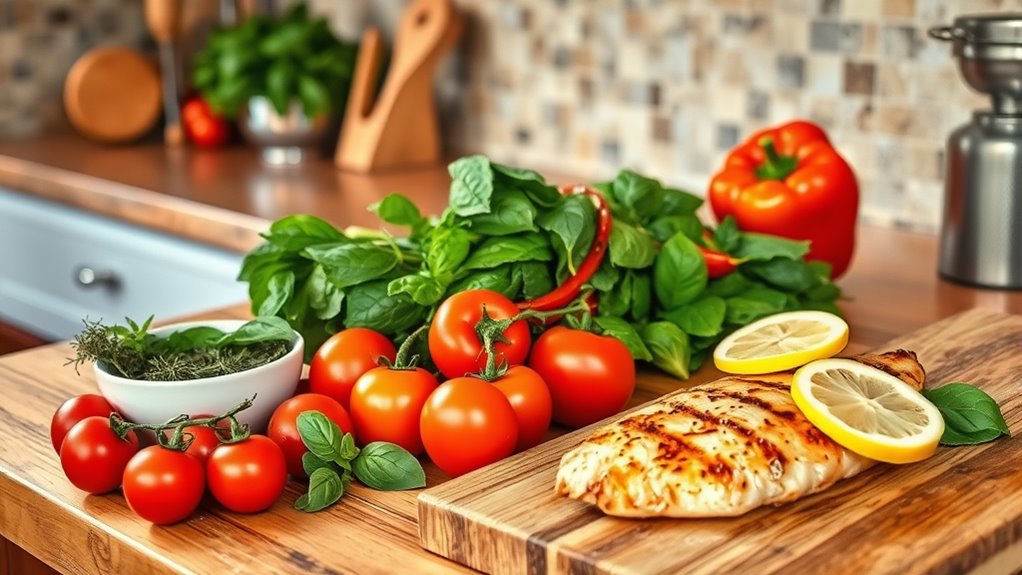
Are you looking for ways to enjoy flavorful meals without excess salt? If so, exploring herbs and spice blends is a fantastic starting point. Using herb combinations can transform a dull dish into a vibrant, aromatic experience without relying on salt. Fresh herbs like basil, cilantro, parsley, thyme, and rosemary add depth and brightness, making your dishes pop with natural flavor. Dried herbs work well too, especially when added early during cooking, allowing their flavors to meld seamlessly. Combining herbs in creative ways can elevate everything from grilled vegetables to roasted meats, giving you more taste without the sodium.
Herb combinations transform dishes with natural flavor, reducing the need for salt.
Spice blends are equally powerful tools in low-sodium cooking. They’re carefully crafted combinations of spices and herbs designed to enhance flavor without salt. Think of chili powder, cumin, paprika, turmeric, coriander, and black pepper. These blends can be used to season soups, stews, marinades, and even salads, providing complexity and warmth that might otherwise come from salt. Many store-bought spice blends are convenient, but you can also make your own at home, tailoring them to your preferences. By experimenting with different combinations, you develop your palate and discover new flavor profiles that keep your meals exciting.
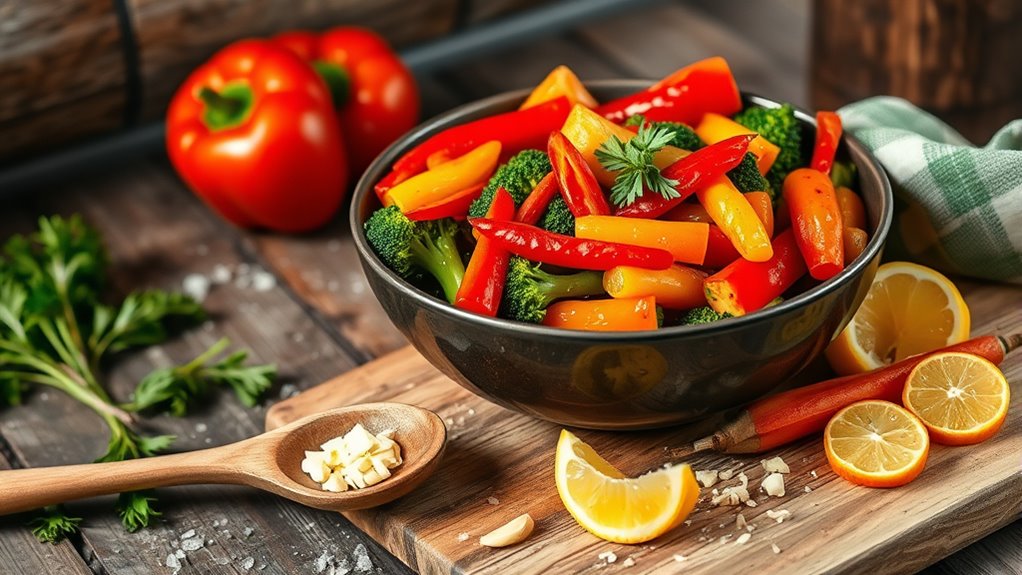
When you start using herb combinations and spice blends, you’ll notice your dishes become more layered and interesting. For example, a simple grilled chicken can be transformed with a rub of garlic, paprika, and thyme, or a vegetable stir-fry can be jazzed up with a dash of cumin and coriander. The key is to taste as you go, adjusting your herb and spice levels to find that perfect balance. Remember, herbs and spices don’t just add flavor—they can also contribute health benefits, such as anti-inflammatory properties or antioxidants, making your dishes both tasty and nutritious.
Another tip is to toast your spices lightly in a dry skillet before adding them to your dishes. This enhances their aroma and flavor, giving your food a richer, more intense taste without salt. Keep a well-stocked spice rack with a variety of blends and herbs, so you’re always ready to season creatively. Over time, you’ll develop a sense of which combinations work best for different dishes, helping you maintain a low-sodium diet without sacrificing flavor. With a little experimentation, you’ll find that you don’t need salt to enjoy delicious, satisfying meals. Instead, you’ll be creating vibrant dishes that nourish your body and delight your senses.

Dash Salt-Free Seasoning Blend, Garlic & Herb, 2.5 Ounce
Just a few shakes brings all the salt-free flavor you need to nearly any dish
As an affiliate, we earn on qualifying purchases.
As an affiliate, we earn on qualifying purchases.
Frequently Asked Questions
Can I Replace Salt With Other Seasonings Effectively?
You can definitely replace salt with other seasonings effectively. Using salt substitutes, like potassium chloride, provides a salty taste without the sodium. For flavor enhancement, try herbs, spices, lemon juice, or vinegar to boost your dishes. Experimenting with these options helps you create flavorful meals without relying on salt, making your cooking healthier and just as delicious. Keep exploring different combinations to find what best satisfies your palate.
Are Low-Sodium Recipes Suitable for All Dietary Restrictions?
Imagine savoring a dish bursting with vibrant herbs and spices, no salt needed. Low-sodium recipes suit most dietary restrictions, including hypertension and heart disease, offering flavorful meals without excess salt. However, if you have specific medical conditions like kidney disease, it’s best to check with your healthcare provider first. You can enjoy tasty, health-conscious meals tailored to your needs without sacrificing flavor or safety.
How Does Reducing Salt Affect Food Preservation?
Reducing salt can impact food preservation by decreasing its ability to inhibit bacterial growth. You might consider using salt substitutes, which help maintain flavor while supporting food safety. Keep in mind, lower salt levels may shorten shelf life, so proper storage and alternative preservation methods like refrigeration or natural preservatives become more important. By balancing salt reduction with these strategies, you can keep food safe without sacrificing taste.
What Are the Best Herbs to Enhance Flavor Without Salt?
Like a painter choosing vibrant colors, you can elevate dishes with the right herbs. For flavor enhancers without salt, try herb combinations like basil, thyme, and oregano for a Mediterranean touch, or cilantro and parsley for freshness. These herbs add depth and complexity, making your meals lively and satisfying. Experiment with different blends to discover your perfect mix, and enjoy flavorful, low-sodium dishes that delight the palate.
Can Low-Sodium Cooking Be Used for Meal Prep?
You can definitely use low-sodium cooking for meal prep. Focus on meal prep strategies like batch cooking techniques to prepare flavorful, salt-conscious meals in advance. Incorporate herbs, spices, and acid-based ingredients to enhance taste without added salt. This approach helps you stay consistent with your health goals, saves time, and guarantees you always have nutritious, delicious options ready to go, even on busy days.

Herb Garden Starter Kit – Fruivity 12800+ 15 in 1 Herb Heirloom Seed Kits for Indoor/Outdoor Planting | Herb Indoor Garden Kit Starter – Complete Herb Garden Starter Set with Gift Packaging for Family
🌿 【Complete 15-Herb Culinary Kit】 – Everything included to start growing! Contains 15 popular herb seed varieties (Genovese…
As an affiliate, we earn on qualifying purchases.
As an affiliate, we earn on qualifying purchases.
Conclusion
By embracing low-sodium cooking, you’re revealing a treasure trove of vibrant flavors that nourish your body and soul. Just as a well-tended garden blooms with life, your palate blossoms when freed from excess salt’s grip. Each flavorful bite becomes a symbol of balance and care, guiding you toward healthier habits. Remember, true richness lies not in salt, but in the artistry of thoughtful seasoning—your journey to vibrant health begins with every mindful choice.

Litehouse Freeze-Dried Herbs All 18 Herbs and Blends Variety Gift Pack Collection (14 Herbs, 4 Herb Blends) – Substitute for Fresh Herbs, Gluten-Free, Keto Friendly, Non-GMO, Organic Spice – 18-Pack
FREEZE DRIED DIFFERENCE – All of our herbs are harvested at their peak freshness and loaded into our…
As an affiliate, we earn on qualifying purchases.
As an affiliate, we earn on qualifying purchases.

Kingsford Original No Salt All-Purpose Seasoning 4.25 oz – Bold, Savory Taste Flavor with Zero Sodium for Grilling & Roasting
Full Flavor, No Salt: Enjoy the bold, savory taste you love from Kingsford seasoning—crafted without any added sodium…
As an affiliate, we earn on qualifying purchases.
As an affiliate, we earn on qualifying purchases.