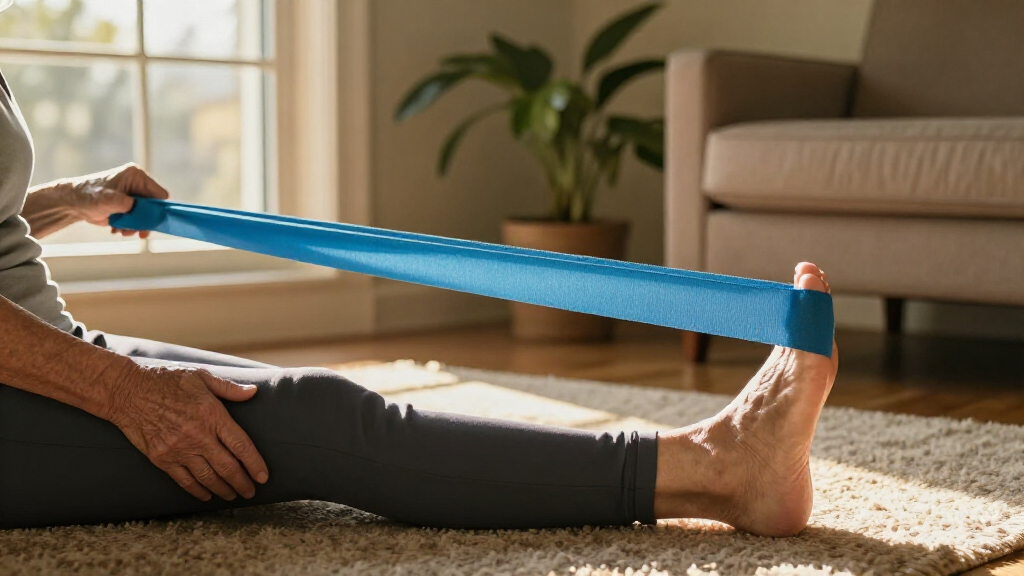

The best mobility exercise equipment depends on whether you want to stretch, build balance, or move your legs while seated. I’d choose the OPTP Original Stretch Out Strap as the best overall for controlled, adaptable stretching; the Vaunn Foldable Compact Pedal Exerciser stands out for seated movement, while the ProsourceFit Exercise Balance Pad suits gentle stability work. The main tradeoffs are between targeted stretching tools and equipment for active movement, plus portability and support versus versatility. Read on for the full breakdown of all 15 options and how I’d match them to different needs.

Give the gift of listening to someone you love
- Choose a 1-, 3-, 6- or 12-month membership
- They pick the audiobooks they love
- Easy to send by email
Complete the kit


Key Takeaways
- Stretching straps offer the widest range of controlled, low-impact mobility work. The OPTP includes an exercise book, while the Trideer provides a longer strap with loops and a non-elastic feel.
- Pedal exercisers serve a different purpose from stretch and balance tools. Vaunn, RYGEO, and MDODM are designed for seated arm or leg movement, so they make more sense when standing practice is difficult or unwanted.
- Adjustability matters most when a tool needs to fit different exercises or body positions. The yoga and mobility sticks and adjustable slant boards allow more setup choices than fixed-shape equipment.
- Balance equipment varies in challenge and stability. A balance pad offers a softer, yielding surface, while wobble boards demand more active control; neither is automatically the right starting point for everyone.
- Compactness does not always mean simplicity. Mini pedal units and straps are easier to store, while multi-use boards and long sticks can cover more movement types but need more space and setup.
| GHCTFE Adjustable Yoga Stick for Stretching and Balance |  | Best for Travel-Friendly Full-Body Mobility | Brand: GHCTFE | Material: Steel core with NBR foam | Sections: 4 | VIEW LATEST PRICE | See Our Full Breakdown |
| NORBASE Adjustable Wooden Slant Board for Calf Stretching |  | Best for Adjustable Calf Stretching | Brand: NORBASE | Model: NB0822 | Material: Wood | VIEW LATEST PRICE | See Our Full Breakdown |
| Ankle Foot Strengthener Exerciser for Sprained, Single Leg Balance Board, Posture Corrector, Foot Stretcher for Plantar Fasciitis Relief |  | Best for Focused Foot and Ankle Training | Brand: WANYIDA | Model: WAN-2309 | Material: Birch plywood | VIEW LATEST PRICE | See Our Full Breakdown |
| Trideer Stretching Strap with Loops, Non-Elastic, 75 in |  | Best Value for Guided Stretching Control | Brand: Trideer | Material: Polyester | Color: Black | VIEW LATEST PRICE | See Our Full Breakdown |
| Adjustable 5-Foot Steel Yoga and Mobility Stick |  | Best for Three-Position Length Adjustment | Material: Alloy stainless steel | Adjustable lengths: 30.7 in, 45 in, and 59.2 in | Design: Detachable, modular construction | VIEW LATEST PRICE | See Our Full Breakdown |
| Movao Mini In-Bed Leg Press for Rehabilitation |  | Best for Bed-Based Leg Mobility | Resistance levels: 6 | Resistance range: Approximately 11–66 lb | Operation: Manual | VIEW LATEST PRICE | See Our Full Breakdown |
| Vaunn Foldable Compact Pedal Exerciser with Electronic Display |  | Best for Adjustable Arm-and-Leg Cycling | Resistance: 16 magnetic levels | Display: LCD showing speed, time, distance, and calories burned; scan function | Height: 12.5 inches | VIEW LATEST PRICE | See Our Full Breakdown |
| RYGEO Pedal Exerciser Mini Exercise Bike – Lightweight Portable Floor Bike for Leg & Arm Recovery |  | Best Lightweight Portable Pedal Exerciser | Resistance levels: 5 | Controls: Knob | Operation: Manual, self-powered | VIEW LATEST PRICE | See Our Full Breakdown |
| OPTP Original Stretch Out Strap with Exercise Book | 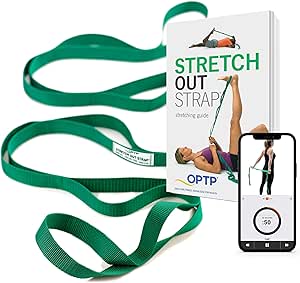 | Best for Guided Flexibility Work | Material: Polyester | Length: 6 feet | Loops: 10 | VIEW LATEST PRICE | See Our Full Breakdown |
| Amazon Basics Wood Wobble Balance Board |  | Best for Balance and Core Mobility | Material: Wood | Color: Black | Weight: 3.4 pounds | VIEW LATEST PRICE | See Our Full Breakdown |
| KUZARO Adjustable Yoga and Mobility Stick for Stretching |  | Best Compact Mobility Stick | Sections: 4 detachable sections | Adjustable lengths: 30.7 in, 45 in, 59.2 in | Core material: Alloy steel | VIEW LATEST PRICE | See Our Full Breakdown |
| ProsourceFit Exercise Balance Pad for Fitness and Stability Training |  | Best for Balance and Ankle Training | Material: TPE foam | Dimensions: 15.5 × 12.5 × 2.5 in | Weight: 12 oz | VIEW LATEST PRICE | See Our Full Breakdown |
| Yoga Stick – Sturdy Steel Mobility Exercise Stick with 3 Adjustable Lengths |  | Best Travel-Friendly Mobility Stick | Brand: Hacole | Model name: Yoga Stick | Adjustable lengths: 29.9 in, 44.4 in, 59 in | VIEW LATEST PRICE | See Our Full Breakdown |
| ODCPN 3-in-1 Slant and Balance Board |  | Best Multi-Mode Stretch and Balance Board | Material: 11-ply AA-grade poplar wood | Weight: 4.5 lb | Listed maximum weight capacity: Conflicting information: 460 lb and 300 lb | VIEW LATEST PRICE | See Our Full Breakdown |
| MDODM Pedal Exerciser for Seniors, Arm and Leg Trainer |  | Best for Seated, Low-Impact Movement | Brand: MDODM | Model: Sway Exerciser | Display: LCD | VIEW LATEST PRICE | See Our Full Breakdown |
| mobility exercise equipment | Material |
|---|---|
| GHCTFE Adjustable Yoga Stick f | Steel core with NBR foam |
| NORBASE Adjustable Wooden Slan | Wood |
| Ankle Foot Strengthener Exerci | Birch plywood |
| Trideer Stretching Strap with | Polyester |
| Adjustable 5-Foot Steel Yoga a | Alloy stainless steel |
| Movao Mini In-Bed Leg Press fo | ABS plastic |
| Vaunn Foldable Compact Pedal E | — |
| RYGEO Pedal Exerciser Mini Exe | Iron |
| OPTP Original Stretch Out Stra | Polyester |
| Amazon Basics Wood Wobble Bala | Wood |
| KUZARO Adjustable Yoga and Mob | — |
| ProsourceFit Exercise Balance | TPE foam |
| Yoga Stick | Alloy steel, TPE foam wrap |
| ODCPN 3-in-1 Slant and Balance | 11-ply AA-grade poplar wood |
| MDODM Pedal Exerciser for Seni | — |
More Details on Our Top Picks
GHCTFE Adjustable Yoga Stick for Stretching and Balance
The GHCTFE yoga stick suits people who want one portable tool for standing stretches, balance drills, and mobility work. Its four sections connect to form a stick up to 59.2 inches, then break down to 16.5 inches for storage or travel. The NBR foam wrapping cushions contact during movements where the stick rests against the body. Compared with the Adjustable 5-Foot Steel Yoga and Mobility Stick, this model packs into a shorter stated length, while the other offers three specified working lengths and rubber tips. The GHCTFE requires twisting the pieces together before use, so it is less convenient for quick sessions than a simple stretching strap. I’d choose it for varied upright drills, not as a substitute for guided rehabilitation or individualized advice; posture and pain-relief claims can vary by user.
Pros:- Four-section construction adjusts to a maximum length of 59.2 inches.
- Breaks down to 16.5 inches for compact storage and travel.
- NBR foam wrapping cushions contact during exercises.
- Illustrated manual is included, and assembly requires no tools.
Cons:- Sections must be twisted together before use.
- The description’s posture and pain-relief claims may not apply to every user.
Best for: Travelers and home exercisers who want a foam-covered, adjustable stick for standing mobility and balance routines.
Not ideal for: Anyone who wants a ready-to-use tool without assembly, or needs a specifically documented set of fixed working lengths and rubber tips.
- Brand:GHCTFE
- Material:Steel core with NBR foam
- Sections:4
- Maximum length:59.2 inches
- Disassembled length:16.5 inches
- Included component:Illustrated instruction manual
Our verdict“Choose the GHCTFE if a compact, foam-wrapped stick for varied standing mobility drills matters more than avoiding assembly.”
NORBASE Adjustable Wooden Slant Board for Calf Stretching
The NORBASE slant board earns its place for focused lower-leg mobility: its four incline settings, from 30° to 45°, let users choose a gentler or steeper position for calf stretches and weight-bearing exercises. That makes it more purpose-specific than the Trideer Stretching Strap, which can target several body areas but does not provide a fixed incline surface. At five pounds and about 15.74 by 11.81 inches, this wooden board can move between home, office, gym, or clinic use, though it takes more room than a strap or a compact foot trainer. Its narrow focus is also its main limitation: it is not a general balance tool or an adjustable bar for shoulder and back mobility. I’d favor it for users building calf stretches into a consistent routine, while recommending professional guidance when using it for rehabilitation.
Pros:- Four incline positions offer a choice of stretch intensity.
- Portable 5-pound design can be moved between locations.
- Wood construction provides a dedicated platform for calf stretching.
- Listed for stretching and rehabilitation routines.
Cons:- Focused mainly on incline-based lower-leg work rather than full-body mobility.
- Its 15.74-by-11.81-inch platform needs more storage space than a strap.
Best for: Adults seeking a portable, adjustable incline surface for calf stretches and weight-bearing flexibility routines at home, work, or a clinic.
Not ideal for: People seeking an all-purpose mobility tool for upper-body stretches, broad balance practice, or a very small storage footprint.
- Brand:NORBASE
- Model:NB0822
- Material:Wood
- Color:Black
- Incline positions:30°, 35°, 40°, 45°
- Weight:5 pounds
- Dimensions:15.74 × 11.81 × 1.37 inches
- Age range:Adult
Our verdict“Pick the NORBASE if adjustable calf-stretch angles are your priority and you do not need a multipurpose mobility device.”
Ankle Foot Strengthener Exerciser for Sprained, Single Leg Balance Board, Posture Corrector, Foot Stretcher for Plantar Fasciitis Relief
This WANYIDA foot and ankle trainer is the most specialized pick here: two movable panels and a Velcro balance bar create options for targeted foot, ankle, and single-leg balance drills. The included QR-coded video guides and fold-out instructions can help beginners follow a routine, unlike the simpler NORBASE slant board, which offers fixed incline positions for calf stretching rather than movable training parts. Birch plywood, a non-slip surface, and a storage bag support portable use, and the listed weight is only 0.34 kg. The tradeoff is its narrow training focus and a 220-pound maximum weight recommendation, which rules it out for some users. I’d treat it as a focused exercise aid, not a replacement for assessment or a clinician-directed plan when recovering from an injury.
Pros:- Movable panels and a Velcro balance bar allow varied foot and ankle exercises.
- QR-coded video guides and a fold-out sheet support follow-along use.
- Compact, lightweight board comes with a storage bag.
- Non-slip surface and birch plywood construction are specified.
Cons:- Maximum weight recommendation of 220 pounds excludes some users.
- Its small 11.61-by-4.33-inch footprint limits it to focused foot and ankle work.
Best for: Adults within the stated weight limit who want guided, portable foot and ankle mobility, strength, and balance exercises.
Not ideal for: People above the 220-pound maximum recommendation or shoppers seeking a larger, general-purpose balance platform.
- Brand:WANYIDA
- Model:WAN-2309
- Material:Birch plywood
- Dimensions:11.61 × 4.33 × 0.89 inches
- Item weight:0.34 kg
- Maximum weight recommendation:220 pounds
- Color:Black
- Included guidance:QR-coded video guides and fold-out instruction sheet
- Included accessory:Storage bag
Our verdict“Choose this trainer for compact, guided foot and ankle drills if its 220-pound limit and specialized format fit your needs.”
Trideer Stretching Strap with Loops, Non-Elastic, 75 in
The Trideer stretching strap is a straightforward choice for controlled, supported stretches across the legs, hips, back, ankles, and feet. Its multiple loops let users adjust hand or foot placement, while the non-elastic design keeps the strap from adding spring resistance during a hold. That makes it a simpler, lower-bulk alternative to the GHCTFE Adjustable Yoga Stick, which is better suited to standing mobility and balance drills but requires assembly. The strap is 75 inches long and weighs 0.08 kg, so it is easy to pack; it can also assist with lifting a leg into bed or a car. It does not provide a rigid surface or bar for balance work, and sensitive hands may benefit from socks or light gloves during longer holds. I’d pick it for gentle, adjustable stretches rather than strength training.
Pros:- Multiple loops allow adjustments to grip and stretch depth.
- Non-elastic construction supports steady holds without springing back.
- 75-inch length supports a range of stretch positions.
- Can assist with lifting a leg into bed or a car.
Cons:- Does not provide elastic resistance for strengthening exercises.
- Long holds may be uncomfortable for users with sensitive hands or skin.
Best for: People who want a lightweight, adjustable aid for seated or lying leg, hip, back, ankle, and foot stretches.
Not ideal for: Buyers who need elastic resistance, a rigid support for balance drills, or a tool that stands in place without being held.
- Brand:Trideer
- Material:Polyester
- Color:Black
- Dimensions:75 in L × 1 in W
- Weight:0.08 kg
- Pack count:1
- Stretch type:Non-elastic
Our verdict“Choose the Trideer for low-bulk, controlled stretching across several body areas, not for resistance or balance training.”
Adjustable 5-Foot Steel Yoga and Mobility Stick
This steel mobility stick stands out for buyers who want three defined working lengths—30.7, 45, and 59.2 inches—to suit different stretches, users, or storage needs. Its padded foam grip and anti-slip rubber tips add comfort and traction for yoga, Pilates, shoulder mobility, and back stretching. Compared with the GHCTFE Adjustable Yoga Stick, which breaks down to a shorter stated 16.5-inch length, this model specifies its three assembled lengths and rubber tips; the GHCTFE, however, has an NBR foam wrap around its steel core. The detachable construction makes the stick easier to store than a one-piece bar, but its threaded sections still need assembly. An exercise guide is included, though claims about pain relief and posture are not independently verified. I’d choose this for varied bar-based stretches, not for seated strap work or foot-specific training.
Pros:- Three working lengths suit a range of stretches and users.
- Detachable construction supports storage and travel.
- Foam grip and rubber tips add comfort and traction.
- Exercise guide is included.
Cons:- Threaded sections require assembly before use.
- Pain-relief and posture benefits described for the product are not independently verified.
Best for: Home or travel exercisers who want a steel bar with three specified lengths for yoga, Pilates, shoulder mobility, and back stretches.
Not ideal for: People who want a no-assembly stretch aid, elastic resistance, or a specialized tool for foot and ankle exercises.
- Material:Alloy stainless steel
- Adjustable lengths:30.7 in, 45 in, and 59.2 in
- Design:Detachable, modular construction
- Grip:5 mm sweat-absorbing foam
- Tips:Anti-slip rubber
- Included:Exercise guide
Our verdict“Pick this stick if you want three defined lengths and rubber tips for bar-based mobility, and are comfortable assembling it.”
Movao Mini In-Bed Leg Press for Rehabilitation
For people who need seated or bed-based leg movement rather than a standing balance challenge, the Movao Mini In-Bed Leg Press is the most recovery-focused pick here. Its padded footplate glides against six resistance levels, giving users room to start gently and progress without getting up to use a machine. It can be positioned on a firm bed, chair, wheelchair, recliner, or floor, while the included stabilizers help keep the setup in place. Compared with the Vaunn Foldable Compact Pedal Exerciser, Movao is better suited to controlled pushing from a supported position, while Vaunn offers cycling motion and a display. The tradeoff is that its elastic resistance is not a substitute for a heavy gym leg press, and a soft mattress may make it less stable. Its 12-pound weight also makes it less effortless to move than the smaller RYGEO pedal unit.
Pros:- Six resistance levels allow gradual changes in effort
- Can be used from several supported positions, including a wheelchair or recliner
- Includes stabilizers, a spare cord, and a carry case
- Manual operation needs no power and arrives fully assembled
Cons:- Resistance may feel too light for users accustomed to gym leg presses
- Works best on a firm surface; soft mattresses may need extra support
- At 12 pounds, it is heavier to carry than the RYGEO mini pedal exerciser
Best for: People in early-stage leg recovery who need adjustable, low-impact exercise from a firm bed, wheelchair, or supported chair.
Not ideal for: People seeking heavy leg-strength training or those who can exercise only on a soft mattress without added support.
- Resistance levels:6
- Resistance range:Approximately 11–66 lb
- Operation:Manual
- Item weight:12 lb
- Folded dimensions:24.5 × 11.5 × 5.5 in
- Maximum weight recommendation:350 lb
- Material:ABS plastic
- Included components:Carabiners, protective carry case, stabilizers, spare cord
- Warranty:1 year
Our verdict“Choose Movao for adjustable, supported leg pressing during early recovery, but skip it if you need heavy resistance or a stable setup on a soft bed.”
Vaunn Foldable Compact Pedal Exerciser with Electronic Display
The Vaunn Foldable Compact Pedal Exerciser earns its place for buyers who want one machine for both arm and leg cycling, with more resistance adjustment than the simpler RYGEO. Its 16 magnetic resistance levels let users fine-tune effort, and the quiet flywheel suits a home or office where noise matters. The LCD tracks speed, time, distance, and calories, offering a basic record of activity without requiring a separate device. Interchangeable pedal pairs add flexibility for different grips. Compared with the Movao Mini In-Bed Leg Press, Vaunn supports a circular pedaling motion rather than a supported push, so it is less tailored to bed-based leg pressing but more versatile for seated arm and leg sessions. Its folding frame and carry handle help with storage, though the supplied details do not give a weight or folded measurements, making fit and portability harder to judge before buying.
Pros:- Sixteen magnetic resistance levels offer finer adjustment than the RYGEO’s five
- Supports both arm and leg exercise with interchangeable pedal pairs
- Quiet flywheel is suited to shared spaces
- LCD displays several workout metrics and includes a scan function
Cons:- Cycling motion may not suit users seeking the supported pushing action of the Movao leg press
- No item weight or folded dimensions are provided in the supplied product details
- Display metrics track activity but do not provide guided rehabilitation instruction
Best for: Home or office users who want quiet seated cycling for both arms and legs, with adjustable resistance and workout metrics.
Not ideal for: People who need a bed-based leg press, exact compact-storage measurements, or a device with a specified resistance range.
- Resistance:16 magnetic levels
- Display:LCD showing speed, time, distance, and calories burned; scan function
- Height:12.5 inches
- Pedals:Two pairs of interchangeable rough-shoe and smooth-grip pedals
- Storage:Foldable design with carry handle
- Exercise modes:Arm and leg cycling
- Flywheel:Quiet operation
Our verdict“Pick Vaunn for quiet, adjustable seated cycling with basic tracking; choose Movao instead if supported leg pressing is your priority.”
RYGEO Pedal Exerciser Mini Exercise Bike – Lightweight Portable Floor Bike for Leg & Arm Recovery
At 1.9 kg, the RYGEO mini pedal exerciser is the easiest choice in this group to move between rooms or bring along for seated leg and arm activity. Its self-powered, manual design avoids cords and batteries, and the five-level tension knob keeps operation straightforward. That simplicity is useful for low-intensity mobility work, including gentle cycling during recovery, but it also sets a limit: the product is not presented as a demanding cardio trainer. Compared with the Vaunn Foldable Compact Pedal Exerciser, RYGEO is lighter and more basic; Vaunn offers 16 magnetic resistance settings and an LCD, making it a better fit for users who want more control and tracking. RYGEO’s reinforced steel pipes and ABS components provide a practical compact build, though its manual knob may not offer the fine adjustment of Vaunn’s wider range.
Pros:- Light 1.9 kg build is easy to move and store
- Five resistance levels provide basic adjustment for low-intensity sessions
- Self-powered operation needs no batteries or electricity
- Can be used for both arm and leg cycling
Cons:- Limited resistance makes it unsuitable for intense cardio sessions
- Manual knob adjustment is less fine-grained than the Vaunn’s 16 magnetic levels
- No workout display is listed for tracking session metrics
Best for: People recovering from knee or shoulder surgery who want a light, simple pedal unit for gentle arm or leg movement at home or work.
Not ideal for: Users seeking intense cardio, detailed workout tracking, or a broad range of precisely adjustable resistance.
- Resistance levels:5
- Controls:Knob
- Operation:Manual, self-powered
- Item weight:1.9 kg
- Material:Iron
- Color:Grey
- Exercise modes:Leg and arm cycling
Our verdict“Choose RYGEO if low weight and simple, gentle arm-and-leg cycling matter more than advanced resistance control or workout tracking.”
OPTP Original Stretch Out Strap with Exercise Book
The OPTP Original Stretch Out Strap takes a different route from the pedal exercisers and leg press in this roundup: it supports flexibility and controlled range-of-motion work rather than repeated strengthening movement. Its six-foot, non-elastic webbing and ten loops give users several ways to position their hands or feet, helping adjust a stretch without relying on a partner or pulling directly on a limb. The included exercise booklet and video guide make it more instructional than a plain strap. Compared with the Movao Mini In-Bed Leg Press, it is lighter and easier to pack, but it does not provide progressive resistance for leg pressing. The firm, non-stretch material can give a stable hold, though buyers wanting a resistance-band feel should choose an elastic option instead. At four ounces, it is the most portable mobility aid among these picks.
Pros:- Ten loops offer multiple hand and foot positions
- Non-elastic webbing provides a stable hold during stretches
- Includes a 40-page exercise booklet and video stretching guide
- Four-ounce weight makes it easy to carry
Cons:- Non-elastic construction will not serve users looking for a resistance band
- Does not provide the repeated leg movement or adjustable loading of the Movao press or Vaunn pedal exerciser
Best for: People who want a portable tool for guided stretching, physical therapy movements, yoga, or Pilates, especially when adjustable hand and foot positions help.
Not ideal for: Buyers seeking elastic resistance for strength work or a pedal device for repetitive arm and leg movement.
- Material:Polyester
- Length:6 feet
- Loops:10
- Elasticity:Non-elastic
- Weight:4 ounces
- Size:One size
- Included:40-page exercise booklet and video stretching guide
- Country of manufacture:USA
Our verdict“Choose the OPTP strap for portable, position-adjustable stretching with guidance, not for resistance-based strengthening or cycling.”
Amazon Basics Wood Wobble Balance Board
For mobility routines centered on balance, coordination, and core control, the Amazon Basics wood wobble board adds a standing challenge that the seated exercisers cannot provide. Its 15.75-inch square platform can also support exercises such as planks and push-ups, broadening its use beyond balance practice. The non-slip surface is intended for dry, non-slip floors, and the listed 265-pound maximum weight recommendation gives buyers a defined capacity. Compared with the OPTP Original Stretch Out Strap, this board asks for active weight-bearing rather than assisted stretching; it is a better fit for users ready to work on stability, but a poor match for anyone who needs supported, seated mobility. The central tradeoff is footing: the board should not be used on wet or smooth surfaces, so floor conditions and user steadiness matter before adding movement.
Pros:- Supports balance, coordination, posture, core, plank, and push-up exercises
- Non-slip surface is designed to provide grip on appropriate flooring
- Maximum weight recommendation is 265 lb
- Compact square board weighs 3.4 lb
Cons:- Should not be used on wet or smooth surfaces
- Standing balance work may be unsuitable for people who need supported exercise
- Unlike the OPTP strap, it does not assist stretching or offer adjustable hand and foot positions
Best for: People able to stand or support body weight who want to add balance and core exercises to a mobility routine on a dry, grippy floor.
Not ideal for: Users who need seated or bed-based exercise, have difficulty balancing without support, or lack a suitable dry, non-slip floor.
- Material:Wood
- Color:Black
- Weight:3.4 pounds
- Dimensions:15.75 × 15.75 × 3.15 inches
- Maximum weight recommendation:265 pounds
- Surface:Non-slip; intended for dry, non-slip floors
- Warranty:1-year limited warranty
Our verdict“Choose this board for weight-bearing balance and core practice on a suitable floor, but skip it if you need supported or seated mobility work.”
KUZARO Adjustable Yoga and Mobility Stick for Stretching
The KUZARO Adjustable Yoga and Mobility Stick suits people who want one pole for standing stretches at home and on the go. Its four detachable sections form three lengths, from 30.7 to 59.2 inches, so users can choose a shorter reach for controlled movements or a longer span for broader stretches. Compared with the Hacole Yoga Stick, it has a slightly longer maximum length, while both use a sectional design that needs to be assembled when changing sizes. The alloy steel core and anti-slip NBR foam grip offer a straightforward combination of support and comfort. The tradeoff is that its stability relies on threaded connections being fully assembled, and changing lengths takes more effort than using a fixed stick. I would skip it if you need an instant-adjust option or documented clinical guidance.
Pros:- Three lengths accommodate different stretches and user reach.
- Detachable sections pack more easily than a fixed-length pole.
- NBR foam grip provides a soft, anti-slip hold.
- Threaded connections are designed to keep assembled sections stable.
Cons:- Sections must be assembled and removed to change lengths.
- The product information does not provide supporting evidence for posture or pain-relief claims.
Best for: Travelers and home exercisers who want a sectional stretching pole with three reach options for mobility routines.
Not ideal for: People who need a pole that changes length quickly between exercises or who are looking for evidence-backed pain-relief claims.
- Sections:4 detachable sections
- Adjustable lengths:30.7 in, 45 in, 59.2 in
- Core material:Alloy steel
- Core thickness:0.8 mm
- Grip material:NBR foam
- Foam thickness:5 mm
- Brand:KUZARO
Our verdict“Choose the KUZARO if portability and three selectable stretch lengths matter more than quick adjustments.”
ProsourceFit Exercise Balance Pad for Fitness and Stability Training
The ProsourceFit Exercise Balance Pad adds a forgiving but unstable surface to standing balance work, foot and ankle drills, and core exercises. At 2.5 inches thick, it creates a different challenge from the ODCPN 3-in-1 Slant and Balance Board: the pad provides a cushioned surface, while the board offers adjustable calf-stretch angles and distinct rotating balance modes. That makes this pad a more versatile pick for floor-based routines and everyday use, including as a knee pad or desk footrest. Its lightweight TPE foam is easy to carry and the sweat-resistant surface is simple to clean. The main tradeoff is control: the shifting surface may feel demanding for beginners, and its 15.5-by-12.5-inch footprint can limit exercises that need more room. Choose it for soft-surface balance practice, not as a replacement for a larger board.
Pros:- Unstable foam surface supports balance, core, and foot-and-ankle exercises.
- Sweat-resistant, non-slip TPE is easy to wipe clean.
- Lightweight 12-ounce build is easy to move between rooms.
- Can double as a yoga prop, knee pad, seat cushion, or standing desk foot pad.
Cons:- The unstable surface may be difficult for people new to balance training.
- The 15.5-by-12.5-inch footprint may be too small for some movements.
Best for: Home exercisers adding balance and foot-and-ankle drills to a mobility routine, especially those who also want a useful knee pad or desk footrest.
Not ideal for: Beginners who need a stable surface for standing practice or users whose exercises require a wide platform.
- Material:TPE foam
- Dimensions:15.5 × 12.5 × 2.5 in
- Weight:12 oz
- Surface:Non-slip and sweat-resistant
- Uses:Balance training, yoga, physical therapy, knee pad, seat cushion, standing desk foot pad
Our verdict“Pick this pad for portable, cushioned balance practice and everyday utility, but choose the ODCPN board for adjustable incline and rotation work.”
Yoga Stick – Sturdy Steel Mobility Exercise Stick with 3 Adjustable Lengths
The Hacole Yoga Stick is a practical choice for people who want a sectional pole that can move from a home routine to a bag or carry-on. Its four sections make three lengths—29.9, 44.4, and 59 inches—giving it nearly the same range as the KUZARO stick, though the KUZARO extends slightly farther. This model stands out for its listed carry bag and instruction manual, which make storage and getting started more straightforward. The steel core provides a firm guide for controlled shoulder, torso, and leg stretches, while the foam wrap adds grip. However, the length still changes by snapping sections together, so it is not a quick-adjust tool during a flowing routine. The product description also makes broad suitability claims, but does not specify exercise progressions or clinical support. I would choose it for portable stretching, not specialized rehabilitation instruction.
Pros:- Three lengths suit a range of standing stretches and reach needs.
- Four sections and an included carry bag support compact transport.
- Alloy steel core gives the pole a firm structure.
- Foam wrap is designed for a comfortable, non-slip grip.
Cons:- Changing lengths requires manually snapping sections together.
- Its maximum length is slightly shorter than the KUZARO stick’s 59.2 inches.
- The product details do not establish clinical guidance for physical therapy use.
Best for: People who travel or work away from home and want a compact mobility stick with a carry bag and several usable lengths.
Not ideal for: Users who want seamless length changes during a workout or need a fixed, clinical rehabilitation program.
- Brand:Hacole
- Model name:Yoga Stick
- Adjustable lengths:29.9 in, 44.4 in, 59 in
- Sections:4 assembly sections
- Material:Alloy steel, TPE foam wrap
- Weight:0.48 kg
- Dimensions:16.89 × 5.24 × 1.54 in
- Included components:Carry bag, instruction manual, 4 assembly sections
Our verdict“Choose the Hacole for a portable, bag-ready stretching pole; pick the KUZARO if you need the longer maximum setting.”
ODCPN 3-in-1 Slant and Balance Board
The ODCPN 3-in-1 Slant and Balance Board combines calf stretching with directional and rotational balance practice, making it the most mode-rich option in this group. Its six incline settings—from 20 to 45 degrees—let users adjust the calf stretch rather than relying on one fixed angle, unlike the ProsourceFit pad, which offers a softer but less structured balance challenge. Magnetic side panels allow mode changes, and the board folds flat for storage. The wood construction and non-slip surfaces create a more rigid platform than foam, which can suit users seeking defined foot placement. That rigidity also means it may feel less forgiving. There is a significant information conflict: the listed maximum capacity is 460 pounds, while another recommendation says 300 pounds. I would not rely on either figure without clarification from the manufacturer.
Pros:- Combines calf stretching with 180-degree directional and 360-degree rotating balance modes.
- Six incline angles allow users to vary calf-stretch intensity.
- Magnetic side panels support quick mode changes.
- Folds flat and weighs 4.5 pounds for storage and transport.
Cons:- Product information gives conflicting maximum weight recommendations of 460 and 300 pounds.
- Rigid wood may feel less forgiving than the ProsourceFit foam balance pad.
- The board has a defined 17-by-11.8-inch platform that may not fit every stance or exercise.
Best for: Home users who want one compact platform for adjustable calf stretches and both directional and rotational balance exercises.
Not ideal for: Anyone who needs a clearly verified weight limit, or beginners who prefer the cushioning of a foam balance pad.
- Material:11-ply AA-grade poplar wood
- Weight:4.5 lb
- Listed maximum weight capacity:Conflicting information: 460 lb and 300 lb
- Adjustable angles:20°, 23°, 30°, 35°, 40°, 45°
- Balance modes:180° directional and 360° rotation
- Surface and base:PVC sandpaper surface; non-slip EVA base
- Dimensions:17 × 11.8 × 1.42 in
- Warranty:1 year
Our verdict“Choose the ODCPN for varied incline and balance drills, but confirm its weight limit before use.”
MDODM Pedal Exerciser for Seniors, Arm and Leg Trainer
The MDODM Sway Exerciser takes a different approach from the sticks and balance boards here: it supports arm and leg movement while the user remains seated. That makes it a fit for people who want a low-impact routine without standing balance work, while the ODCPN board is aimed at calf stretching and upright stability practice. Its pedal-powered design requires no electrical supply, and the LCD tracks time, distance, swing counts, and calories. The 15.4-pound iron-and-ABS frame and four corner feet are intended to provide a stable base, though the product information does not give resistance settings. That omission matters for buyers who need to progress effort or tailor a session. The six-month warranty is also shorter than the ODCPN board’s one-year coverage. I would treat the display as a basic activity tracker, not a measure of rehabilitation progress.
Pros:- Supports arm and leg exercise while seated.
- Pedal-powered operation does not require an electrical connection.
- LCD displays exercise time, distance, swing counts, and calories.
- Steel tubing and four feet provide a substantial base.
Cons:- The description does not specify adjustable resistance.
- At 15.4 pounds, it is less convenient to carry than the lightweight balance pad.
- The six-month warranty is shorter than the ODCPN board’s listed one-year warranty.
Best for: Older adults or seated exercisers seeking gentle arm and leg movement with basic workout tracking and no electric power requirement.
Not ideal for: Buyers who need adjustable resistance, a lightweight device for frequent carrying, or a clearly specified progression for rehabilitation.
- Brand:MDODM
- Model:Sway Exerciser
- Display:LCD
- Power source:Pedal-powered, non-electric
- Battery:1 AAA battery included
- Item weight:15.4 lb
- Maximum weight recommendation:264 lb
- Materials:ABS and iron
- Warranty:6 months
Our verdict“Choose the MDODM for seated, low-impact arm and leg movement, but skip it if adjustable resistance is a requirement.”

How We Picked
I compared these 15 products by the mobility task each one supports: stretching, ankle and calf range of motion, balance practice, or seated movement. I gave more weight to clear practical use, adjustability, and ease of setup than to the number of advertised functions. I also looked at whether the design offers useful guidance, can be stored or repositioned without much effort, and appears suited to repeated home use.
The ranking reflects how broadly useful each item is for its stated purpose, not a claim that one tool suits every body or condition. A strap ranks ahead of a specialized board for general stretching because it can support many positions, while a pedal exerciser ranks higher for seated movement than for flexibility work. I treated stability, resistance, fit, and the need for balance support as meaningful tradeoffs, and avoided ranking a tool as a substitute for clinician-directed rehabilitation.
Factors to Consider When Choosing Best Mobility Exercise Equipment
Before choosing mobility equipment, I’d start with the movement you want to make easier rather than the product category that sounds most complete. A useful tool should fit your current ability, intended routine, and available space; extra functions matter only when you will use them safely and consistently.
Match the Tool to the Movement You Want to Practice
Mobility equipment is not one interchangeable category: a stretching strap helps you control a stretch, while a pedal unit supports repeated movement from a seated position. Balance pads and wobble boards ask you to manage instability, which is a different skill from increasing range of motion. Choose a tool based on the movement your routine actually includes, not on a promise to improve everything at once. A common mistake is buying a balance trainer when the immediate goal is gentle stretching or circulation through movement. If your goals span several areas, begin with the tool you can use safely and regularly, then add another type only when your routine calls for it.
Choose Challenge and Support Before Buying Balance Equipment
Balance tools vary in how much they move or yield beneath you, so the most challenging option is not automatically the most useful. A soft pad can introduce instability in a less rigid way than a rocking board, while a wobble board requires more active control. Think about whether you can hold a stable stance, get on and off the equipment confidently, and keep a hand near a fixed support if needed. Avoid choosing based on a broad label such as “beginner”; your comfort and current balance matter more than the label. If you have a fall risk or are recovering from an injury, ask a qualified clinician which level of challenge is appropriate before using an unstable surface.
Check Adjustability Against Your Actual Range of Motion
Adjustable sticks and slant boards can accommodate different positions, but more settings do not help if setup is awkward or the range still feels uncomfortable. Check whether you can change the length or angle without straining, and whether each setting suits the exercise you intend to perform. Fixed-length straps may be simpler and easier to use across common stretches, while adjustable equipment can offer more setup options. Do not force a deeper stretch just because a tool permits a longer reach or steeper angle. A comfortable, controlled movement is a better starting point than chasing maximum range.
Consider Seated Movement as Its Own Equipment Need
Pedal exercisers are for repeated arm or leg movement while seated; they are not direct replacements for stretching straps or balance devices. Before buying one, check whether the unit can sit securely in the position where you plan to use it and whether its resistance can be managed comfortably. A display may help track activity, but it does not tell you whether the movement is appropriate for a specific rehabilitation plan. Lightweight designs are easier to move and store, though a small footprint can also make placement and stability more important. If you are recovering from surgery or managing pain, confirm the suitable movement and resistance with your care team.
Plan for Storage, Setup, and Routine Use
The best tool is one you can retrieve and set up without making your routine harder. Straps take little storage space, while long sticks and boards need room to store and enough clear floor area to use. Pedal units may be compact, yet you still need a stable place for both the device and your chair. Think through where the item will live and whether you can carry, adjust, or put it away independently. A common buying error is treating portability as the same thing as convenience: a compact unit that shifts during use may be less practical than a larger, stable tool kept nearby.
Pay More for Useful Guidance or Better-Fitting Features
Added features are worth paying attention to when they solve a real problem, such as needing adjustable positioning or clear exercise instructions. A strap bundled with an exercise book may help a new user get started, while a plain strap may be enough for someone who already knows the movements they want to practice. Multiple functions on a board can add flexibility, but they can also create more setup decisions and take up more space. Compare the feature with your routine rather than assuming a more elaborate design delivers better mobility results. If you are new to these tools, simple instructions, a manageable range of motion, and easy setup may matter more than extra modes.
Frequently Asked Questions
Which type of mobility equipment is the most versatile for a home routine?
A stretching strap is often the most adaptable starting point when your main goal is controlled flexibility work, since it can assist with multiple stretches without requiring balance on an unstable surface. In this lineup, the OPTP strap adds an exercise book, while the Trideer offers a 75-inch non-elastic design with loops. Neither is a pedal exerciser or balance trainer, so it will not cover seated cycling or stability practice. I’d choose based on whether built-in guidance or the strap’s length and loop layout better suits your routine. If your needs include several kinds of movement, one versatile tool may still leave gaps.
Should I choose a balance pad or a wobble board?
Choose based on the kind of instability you are ready to manage, rather than assuming these tools have the same difficulty. A balance pad provides a yielding surface, while a wobble board moves underfoot and calls for active balance control. The Amazon Basics Wood Wobble Balance Board and the ProsourceFit Balance Pad therefore suit different practice preferences. If you are unsure about standing safely or have a fall risk, do not start with a challenging balance task without professional guidance. A stable support nearby may help with setup, but it does not make every balance exercise appropriate.
Can a pedal exerciser replace stretching equipment?
No: a pedal exerciser supports repeated movement while seated, while a strap or slant board is intended for stretching positions. The Vaunn, RYGEO, and MDODM units may suit someone seeking seated arm or leg movement, but they do not provide the same stretch assistance as the OPTP or Trideer straps. Your choice depends on whether your priority is active movement from a chair or working through a controlled stretch. Some routines may use both types, but buying both is unnecessary if only one addresses your current goal. Follow clinician guidance when exercise is part of rehabilitation.
What should I choose if I am new to mobility equipment?
I’d begin with a tool that supports controlled movement and does not require you to balance on a moving surface. A stretching strap can assist with positioning, and the OPTP’s included exercise book may be useful if you want direction; the Trideer is another strap option with loops. A pedal unit can suit beginners whose priority is seated movement, but it serves a different purpose. Start with comfortable movements and stop if you feel sharp pain, dizziness, or unusual symptoms. If you are managing an injury or health condition, ask a clinician which exercises are suitable before starting.
Is adjustable equipment worth choosing over a simpler fixed tool?
Adjustability is useful when you expect to change the equipment for different exercises or need a particular setup, as with adjustable mobility sticks and slant boards. It may not be worth added complexity if one straightforward stretch or seated routine is all you need. Before choosing, check how easily you can make adjustments and whether the available settings match movements you can perform comfortably. A fixed strap can be simpler to store and use, while an adjustable board may cover more positions but ask for more setup space. The right tradeoff is the one that makes your intended routine easier, not the one with the most settings.
Conclusion
For most readers focused on home stretching, I’d pick the OPTP Original Stretch Out Strap as the best overall because its exercise book adds guidance to a flexible, low-storage tool. The Trideer Stretching Strap is my best value-style choice for shoppers who want a simple looped, non-elastic strap without needing bundled instruction. For a more specialized or premium-style setup, consider an adjustable yoga or mobility stick if you want a longer support tool with configurable length; compare the GHCTFE, KUZARO, five-foot steel, and three-length steel options against your storage space and preferred setup. Beginners who want guided stretching can start with the OPTP, while beginners seeking seated movement should look at the Vaunn Foldable Compact Pedal Exerciser. For specific needs, choose the ProsourceFit Balance Pad for a yielding stability surface, a slant board for calf-focused positioning, or a pedal exerciser for repeated seated movement; match balance and rehabilitation tools to your ability and any professional guidance.
Evergreen bestsellers Picks

Vitamix Propel Series 510 Professional-Grade Blender, 48 oz, Slate

Ninja Foodi DualZone Smart XL Air Fryer, 10-Quart, 6-in-1, Black, DZ550

De'Longhi La Specialista Arte Evo Espresso Machine with Grinder
As an affiliate, we earn on qualifying purchases.