
This checklist is for older adults, family caregivers, and anyone helping make personal care routines more manageable. It covers everyday bathing, grooming, dressing, and bed protection needs, with room to choose products around the person’s comfort and abilities.

Turn quiet afternoons into listening time
- Thousands of audiobooks, podcasts and originals
- Listen on your phone, tablet or Echo — also offline
- Cancel anytime
The sections follow practical care tasks: bathing without a rinse, choosing adult wipes, reaching during bathing, trimming nails, getting dressed, and selecting underpads. Some entries include a named pick; others offer advice only, so you can focus on the features that matter.
Use the checklist to compare each item with the person’s routine and mobility. Check package details, dimensions, and care instructions before buying, and consider whether the user can handle the item independently or needs caregiver assistance. A good fit should support comfort and safe, dignified care.
No-Rinse Body Wash
A no-rinse bathing option can be useful when a shower or tub routine is difficult to manage. The listed pick is Medline ReadyBath Body Wipes, Shower and Bath for Adults, No Rinse Dis. Review the package to understand how the wipes are intended to be used and whether the format suits the person’s bathing routine.
A common buying mistake is assuming every no-rinse product works the same way or provides everything needed for a full bath. Check the product directions, quantity, and any stated limitations. Consider how much coverage is needed and whether the wipes are easy for the user or caregiver to handle. Confirm any care preferences with the person receiving assistance.
Think about storage and access, too: supplies should be easy to reach when care begins. If the person has particular skin-care needs or sensitivities, review the listed ingredients and consult a qualified professional when appropriate. Match the format to the routine, available assistance, and package instructions rather than relying on the product name alone.
What to look for:
- No-rinse directions and intended use
- Wipe size and count listed on the package
- Ingredients and any stated skin-care information
- Ease of handling for the user or caregiver
- Storage needs and package accessibility
Medline ReadyBath Body Wipes, Shower and Bath for Adults, No Rinse Disposable Wa

Medline ReadyBath Body Wipes are thick, aloe-infused, no-rinse disposable washcloths designed for full-body cleansing. They are hypoallergenic, pH-balanced, and suitable for sensitive skin, ideal for on-the-go use, post-surgery, or when a shower isn’t possible.
Pros:
- Thick, durable wipes that provide a full-body clean
- Infused with soothing aloe for skin comfort
- Resealable packs keep wipes hydrated and fresh
- No-rinse formula ideal for on-the-go, post-surgery, or when showering isn’t possible
Cons:
- Wipes may be less effective for heavy dirt or grease
- Single-use only, generating waste
- May not be suitable for those with severe skin sensitivities despite being hypoallergenic
Best for: Adults and caregivers seeking a no-rinse bathing format
Not ideal for: People whose routine requires a different bathing format
Bottom line: Check the directions and package details to confirm these wipes fit the person’s bathing routine.
Adult Wet Wipes
Adult wet wipes can support cleanup between bathing routines, but the right choice depends on how and where they will be used. Decide whether the priority is everyday personal cleanup or caregiver-assisted care, then compare package directions and intended use. Comfort and handling matter: a wipe should be manageable for the person using it or helping with care.
One common mistake is treating all wipes as interchangeable. Check the package for intended use, wipe dimensions, count, and disposal directions. Do not assume a wipe is flushable unless its packaging says so, and follow local plumbing guidance. If the user has skin sensitivities, review the ingredient information and seek professional guidance for specific concerns.
Consider package design as part of the choice. A closure that is easy to open and reseal can help keep wipes accessible during routine care; the package should also fit the available storage space. For assisted care, think through the steps involved and keep supplies within reach. Choose by routine and package instructions, not by a general label alone.
What to look for:
- Intended use stated on the package
- Wipe dimensions and package count
- Ingredient information for skin-care considerations
- Opening and resealing ease
- Clear disposal directions
Long-Handled Bath Sponge
A long-handled sponge can help with reaching areas that are difficult to access during bathing. The listed pick is Sammons Preston Bath Sponge, Long Handled Back Scrubber, 26". Consider whether its handle length and shape suit the user’s reach and bathing setup; verify the listed dimensions and product details before buying.
A frequent mistake is choosing by length alone. A longer handle may not be comfortable for every person to control, and grip, flexibility, and storage can matter as much as reach. Review the product information for construction and care instructions, and consider whether the user can hold and maneuver it safely. If a caregiver assists, make sure the tool fits the planned bathing routine.
Think about the areas the person wants to reach and whether a sponge or scrubber format is appropriate for their preferences. Avoid assuming that a long handle replaces help or makes every bathing situation safe. Check reach and control together, and follow the product’s directions for use and cleaning. If balance or mobility is a concern, plan bathing support separately from selecting the sponge.
What to look for:
- Listed handle length and overall dimensions
- Grip and maneuverability for the intended user
- Sponge or scrubber format suited to preferences
- Care and cleaning instructions
- Compatibility with the person’s bathing setup
Sammons Preston Bath Sponge, Long Handled Back Scrubber, 26"

This bath sponge features a long, bendable handle that measures 26 inches, designed to help users reach hard-to-access areas like the lower back. Made from non-latex recycled plastic, it is ideal for elderly individuals, those with disabilities, or anyone needing assistance with bathing independence.
Pros:
- Long handle increases reach and independence during bathing
- Bendable handle can be customized for comfortable use
- Made from non-latex, eco-friendly materials
Cons:
- Handle may require heat gun for shaping, which could be inconvenient
- Limited to use as a bath scrubber, not a versatile cleaning tool
Best for: People who want help reaching during bathing
Not ideal for: Users who cannot comfortably control a handled sponge
Bottom line: Confirm the 26-inch handle and grip suit the user’s reach and control.
Adaptive Nail Clippers
Adaptive nail clippers are intended to make grooming easier to manage for people who prefer or need a different grip. The listed pick is Leader Toenail Clipper for Adults, Easy Grip, White & Blue, 1 Count. Review the package and product details to confirm the intended nail type and how the grip is designed.
A common mistake is selecting clippers without checking whether they are for fingernails, toenails, or both. This pick names toenails, so consider whether that matches the task. Look for information about handle shape and opening, and think about the user’s hand strength, dexterity, and ability to see the nail clearly. If independent trimming is difficult or unsafe, arrange suitable assistance rather than relying on a tool alone.
Before purchase, check any care or cleaning directions and consider where clippers will be stored between uses. Do not force a cut or use a clipper in a way that causes discomfort. People with specific foot-care needs should follow guidance from their care professional. Match the tool to the nail-care task and the person’s grip, then use it according to its directions.
What to look for:
- Intended use for toenails or fingernails
- Handle shape and grip details
- Ease of opening and controlling the clipper
- Cleaning and storage directions
- Fit with the user’s dexterity and care needs
Leader Toenail Clipper for Adults, Easy Grip, White & Blue, 1 Count
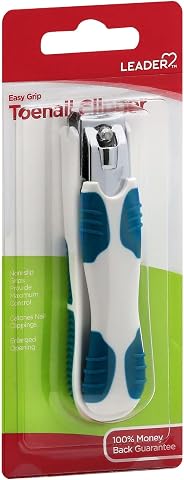
This toenail clipper features an ergonomic design for comfortable handling and precise trimming. Made from durable materials, it offers effortless maintenance and is suitable for adults and children aged 12 and up.
Pros:
- Ergonomic design for comfortable handling
- Precise trimming of toenails
- Durable construction for long-lasting use
Cons:
- Limited to a single nail clipper per pack
- Not suitable for children under 12
Best for: Adults seeking an easy-grip toenail clipper
Not ideal for: People looking specifically for a fingernail clipper
Bottom line: Confirm the toenail use and grip design suit the person’s grooming needs.
Dressing Aid Stick
A dressing aid can help with pulling clothing into place when reaching or bending is challenging. The listed pick is Dressing Aid for Pants, 2-Pack Clip & Pull Tool for Elderly & Disabled. Its name describes a clip-and-pull approach for pants; check the product details to understand how the clips attach and how the tool is used.
A frequent mistake is assuming a dressing aid works with every garment or clothing design. Consider the pants the person wears and whether the clips can be used with them as directed. Review the tool’s dimensions and handling information, and think about whether the user can operate the clips with their available grip and coordination. For caregiver-assisted dressing, consider whether the tool fits the usual sequence of getting dressed.
Before buying, confirm what is included in the two-pack and read any use or care directions. The tool may not address every dressing challenge, so consider the specific movement the person needs help with. Check garment fit and clip operation before relying on it as part of a routine. Allow time to practice according to the instructions, with support if needed.
What to look for:
- Clip attachment method and intended garment use
- Tool dimensions and handling details
- Compatibility with the person’s pants
- Ease of operating clips with the user’s grip
- What is included and care instructions
Dressing Aid for Pants, 2-Pack Clip & Pull Tool for Elderly & Disabled

This dressing aid helps individuals with limited mobility or arthritis to put on or take off pants using one hand. It features durable metal clips and extended straps for easy, secure, and effortless dressing.
Pros:
- Helps with one-handed dressing for limited mobility
- Strong, secure metal clips that prevent slipping
- Lightweight and portable for travel or home use
- Universal fit for various clothing types
Cons:
- May require some initial adjustment for secure grip
- Not suitable for very thick or heavy fabrics
- Limited to pants and similar clothing
Best for: People who want assistance pulling pants into place
Not ideal for: Users whose clothing or grip does not suit the clip method
Bottom line: Check clip operation and clothing compatibility against the product directions.
Incontinence Underpads
Underpads can be considered when a bed or other surface needs an added layer for incontinence care. With no specific product listed, start by identifying where the pad will be used and what coverage the routine calls for. Surface and coverage are key: compare the pad dimensions with the mattress, chair, or other intended area.
A common buying mistake is choosing a size without checking how the pad will sit on the surface. Look at the package for dimensions, intended placement, and care or disposal instructions. If considering a reusable option, check its washing directions; for a disposable option, review its disposal guidance. Do not assume a pad is suitable for every surface or type of care.
Consider who will position and change the pad, and whether its design supports the routine. Check package information for any stated absorbency details and select according to the person’s needs and care plan. Use package guidance to compare options, and ask a healthcare professional for help if you are unsure which kind of incontinence product is appropriate.
What to look for:
- Dimensions suited to the intended surface
- Intended placement and use
- Package-stated absorbency information
- Reusable washing or disposable directions
- Ease of positioning and changing
Build the checklist in a practical order: first identify the care task that is hardest to manage, then choose the supplies that address it. Confirm sizing, handling, package directions, and storage for each item before adding more. Start with daily needs and let the person’s routine guide the order.
Care needs can change, and it is fine to adjust the checklist over time. Involve the person receiving care in choices whenever possible, and ask a qualified professional about specific skin, foot-care, or incontinence questions. Small, well-matched supplies can help make everyday care feel more manageable.
Fall Picks
fall essentials
As an affiliate, we earn on qualifying purchases.